
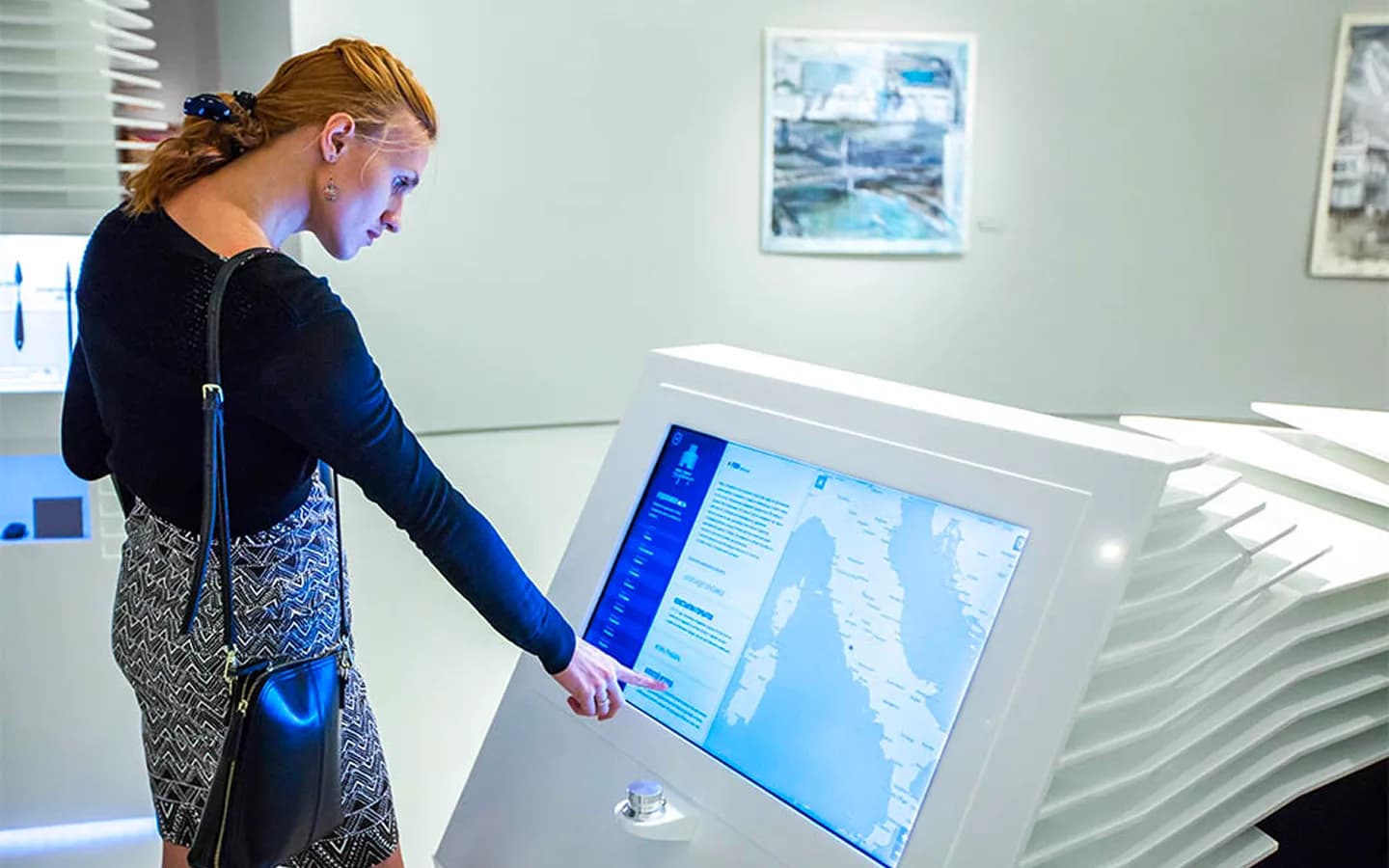
This case is part of the series of interactive installations for the Museum of Russian Impressionism, created for the museum opening in 2016.
The installation works with the geography of Russian Impressionism and the places where artists made paintings. This is especially important for plein-air painting: many works are connected to a specific place, light, landscape, and travel route.
Interaction scenario
On the map, the visitor explores connections between artist, place, work, and context. They select a point and move to related paintings and artists.
Design problem
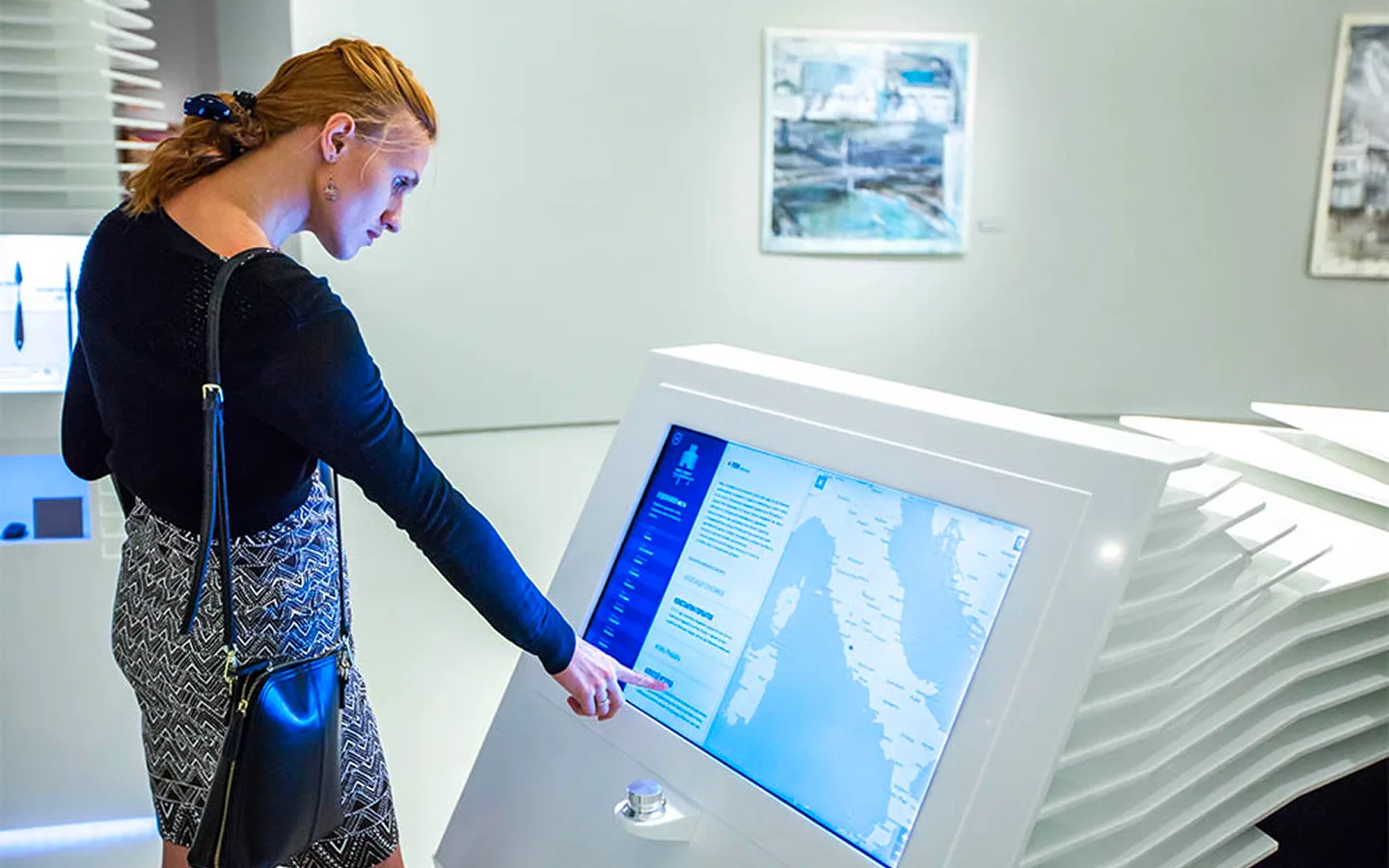
The map had to turn museum research into understandable navigation. It was not enough to show points. The interface had to connect place, artist, artwork, and movement through the material.
The sensor panel and wheel controller shaped the control model. The interface had to support that control so the visitor would not get lost between map, selected point, artists, and related works.
Takeaway
This installation presents Impressionism as cultural geography. The interface helps visitors see not only individual paintings, but also the connections between places, travel, artists, and museum knowledge.
Related cases
Back to the series. Related installations: How Paintings Are Made, Scientific Experiments: Color and Light, Artist Tools, Artist Workshop Dioramas.